
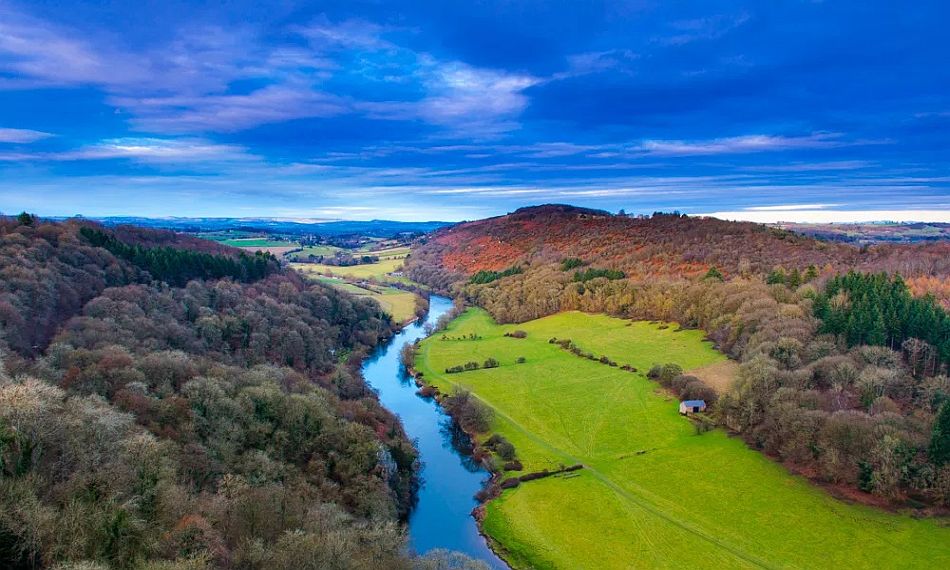
Twenty-five unique walks to download and enjoy
These walks are part of an archive consisting of nearly 150 routes in and around Herefordshire which were conceived, tried, tested and put into print by local writer Garth Lawson. They appeared every month for more than twelve years in The Hereford Times. Maps have recently been updated and routes checked.
Hamnet in Weobley
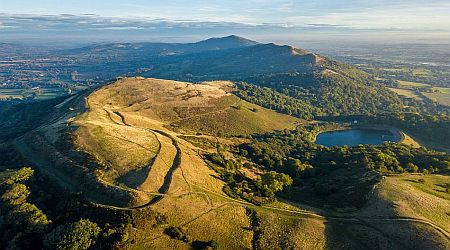
It probably hasn’t been every day of the week that a sleepy north-western corner of Herefordshire has been associated with Hollywood and the Oscars but all of this changed when Irish girl Maggie O'Farrell’s award-winning novel Hamnet came to town. The delightful work, adapted for film with sensational results, is a fictional account of the lives of William Shakespeare and his wife Agnes. It delves into how the death of their son could have influenced one of the writer's most enduring masterpieces, Hamlet. For it was Weobley in the old Welsh Marches, some sixty miles west of Shakespeare’s famous home in Stratford-Upon-Avon, that was chosen as the filming location for many scenes in the film. The production, specifically, was suitably based around Broad Street, Bell Square and Church Road in Weobley for several months, capturing O'Farrell's take on the playwright's early years. Many of the black and white buildings are from the late 15th and early 16th century and the landscape nearby is described by Visit Herefordshire as "bucolic" and "Shakespearean", so visitors don't have to stretch their imagination too much to immerse themselves in the movie’s world. There is certainly more than a passing resemblance to the days of 1596 in which the film is set. So, the accolades were showered on Hamnet at the 98th Academy Awards on March 15, 2026, with Jessie Buckley winning Best Actress for her role as Agnes. Altogether, the film received a total of eight nominations, including Chloé Zhao for Best Picture and Director. This folklorist walk takes in Weobley, Garnstone, Fenhampton, and The Ley.
Follow in the pioneering footsteps of Alfred Watkins
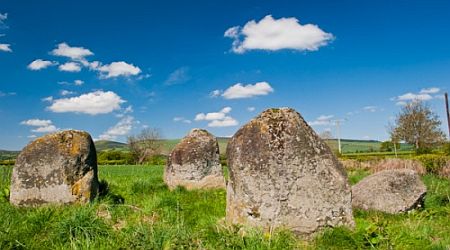
The walks themselves give you the opportunity to explore the countryside which inspired Alfred Watkins and led him to formulate his theory about ley lines. Watkins was a photographer, scholar, miller, farmer, archaeologist, naturalist, inventor, magistrate, politician and leader of public opinion. His Eureka moment came when he was driving through Blackwardine (Walk One) and stopped at a crossroads to consult his Ordnance Survey map. It was 30 June 1921 and, looking from map to landscape and back again, he was astonished by what he perceived. A series of notable landmarks - hilltops, a stretch of old lane and two encampments - lay before him in a dead straight line that extended over several miles. He soon concluded that the line was part of a network of straight tracks that stood out like “glowing wires all over the surface of the country,” intersecting at the sites of standing stones, earthworks, wells, ridge-notches and other charismatic waypoints, or radiating out of hilltops like the spokes from a hub. He called them “leys.” This theory was explained in his seminal work, The Old Straight Track, which still inspires Ley Hunters and ramblers to follow in his pioneering footsteps.
Exploring the landscape which fired the imagination of one of Britain’s great composers
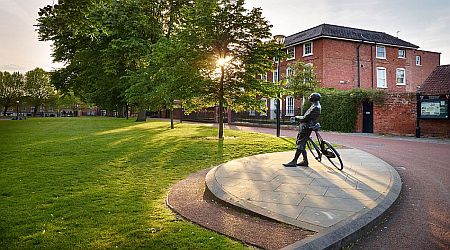
Born in a tiny rural Worcestershire cottage, the son of a modest piano-tuner, Edward Elgar’s music saw him transcend humble beginnings to achieve international fame and earn a knighthood along the way. The five walks that we have devised are set in the town, river, hills and countryside which were familiar to Elgar at the turn of the twentieth century. From 1891 to 1904, the composer lived on either side of the Malvern Hills, which provided much of the inspiration for his early works. In our Malvern Hills Pilgrimage (Walk Four) for example, we bestride the same dramatic domain as his choral work Caractacus. From 1904 to 1911 Elgar lived in Hereford and we visit the places where he walked or cycled when at the height of his powers. There’s even a nod to fellow maestro George Bernard Shaw on Bringsty Common. Elgar’s enduring appeal is witnessed by Land of Hope and Glory being a signature tune of the Last Night of the Proms.
Unique railway walks to download and enjoy
These thirteen walks are part of an archive consisting of nearly 150 routes in and around Herefordshire which were conceived, tried, tested and put into print by local writer Garth Lawson. They appeared every month for more than twelve years in The Hereford Times. Maps have been updated and routes checked in the spring of 2021. The historical and topographical background of each walk can be found on this website. Alongside nationwide plans to open up the course of old railway lines for recreation, there are exciting local plans to re-open the one between Worcester, Bromyard and Leominster. One of the prime movers, Tom Fisher, says "It's a fantastic route through beautiful countryside and the idea would be to create an all-purpose route for the use of walkers, cyclists and horse riders; it would be economically beneficial to the area. This is a complex and challenging project but we have been encouraged by the wide-ranging support we have received.” We take a look that way at Rowden Mill and Fencote stations on our timetable. There are also four walks along the dreamy Hereford, Ross and Gloucester line, three which closely follow in the wake of the Monmouth Bullet in the outstandingly beautiful Wye Valley, two to the Kington and Eardisley and one each to the Leominster and Kington and Ludlow and Clee Hill.
Downloading the walks
Each walk can be individually downloaded as a pdf from the relevant page. They are all free, but in exchange we would ask for a donation to St Michael's Hospice, near Hereford. How much you choose to donate is entirely up to you.
Hamnet in Weobley
Walking with Alfred Watkins
Walking with Edward Elgar
Herefordshire Railway Walks